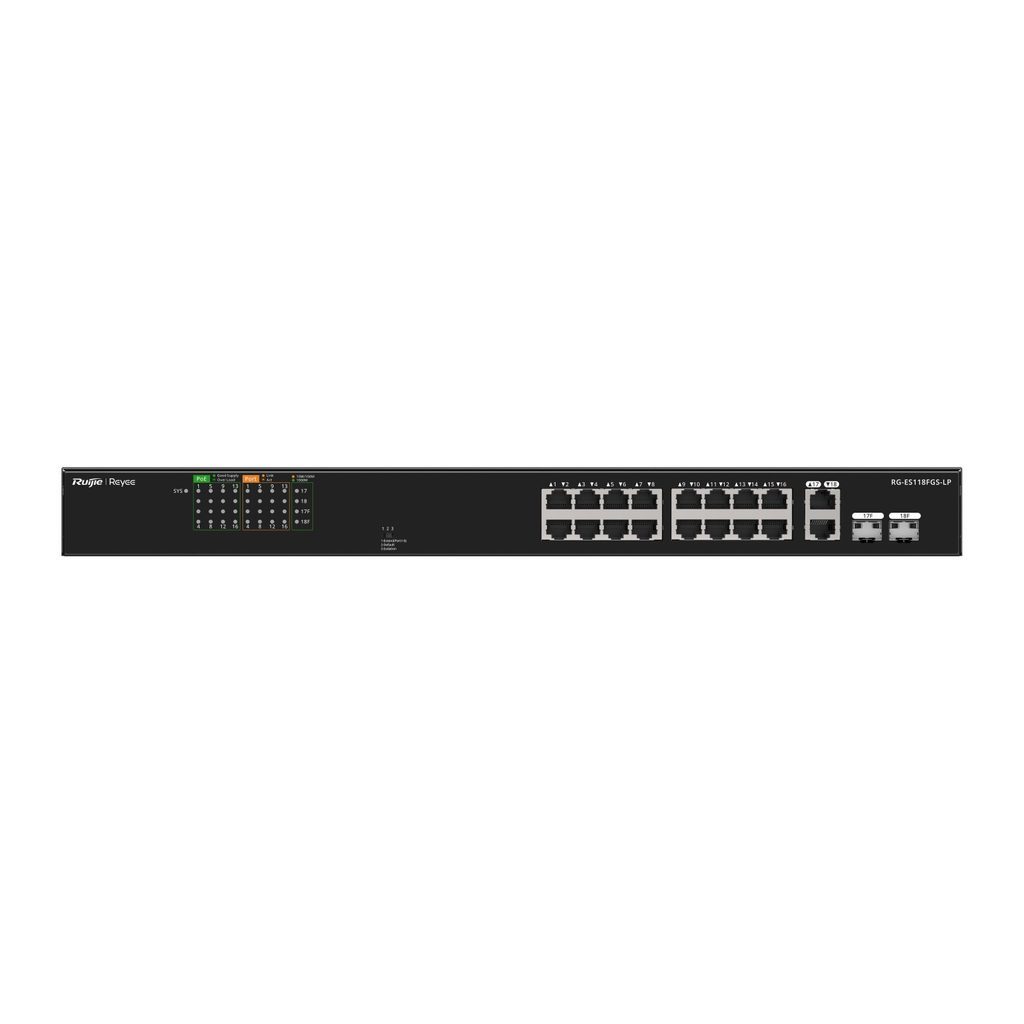
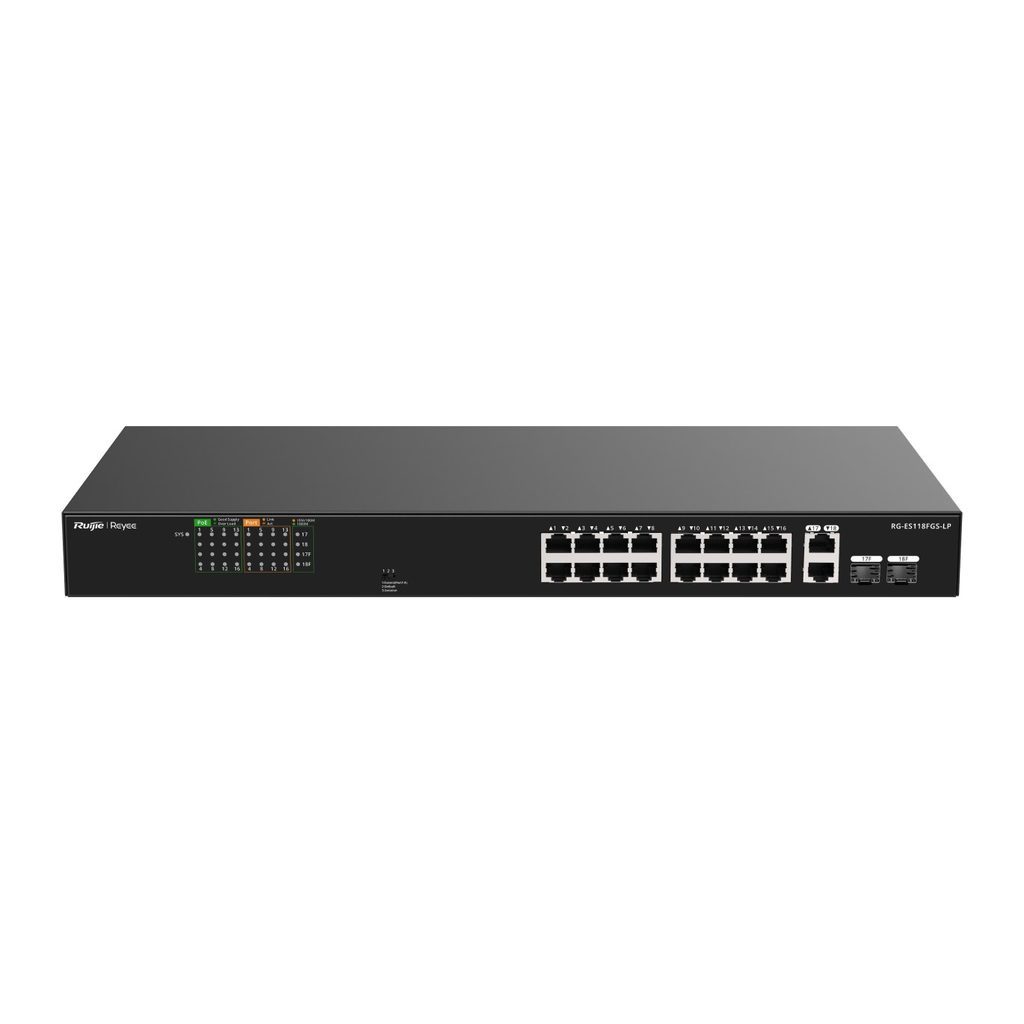
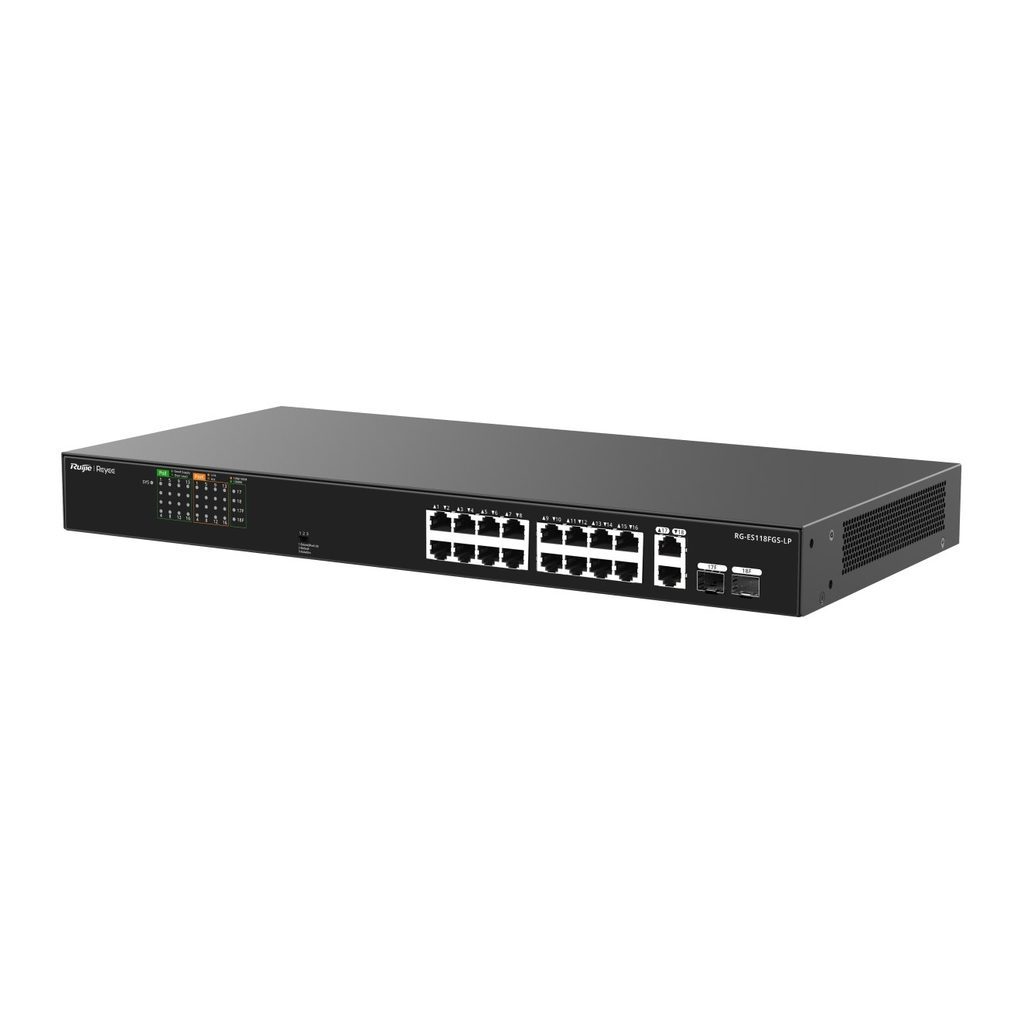
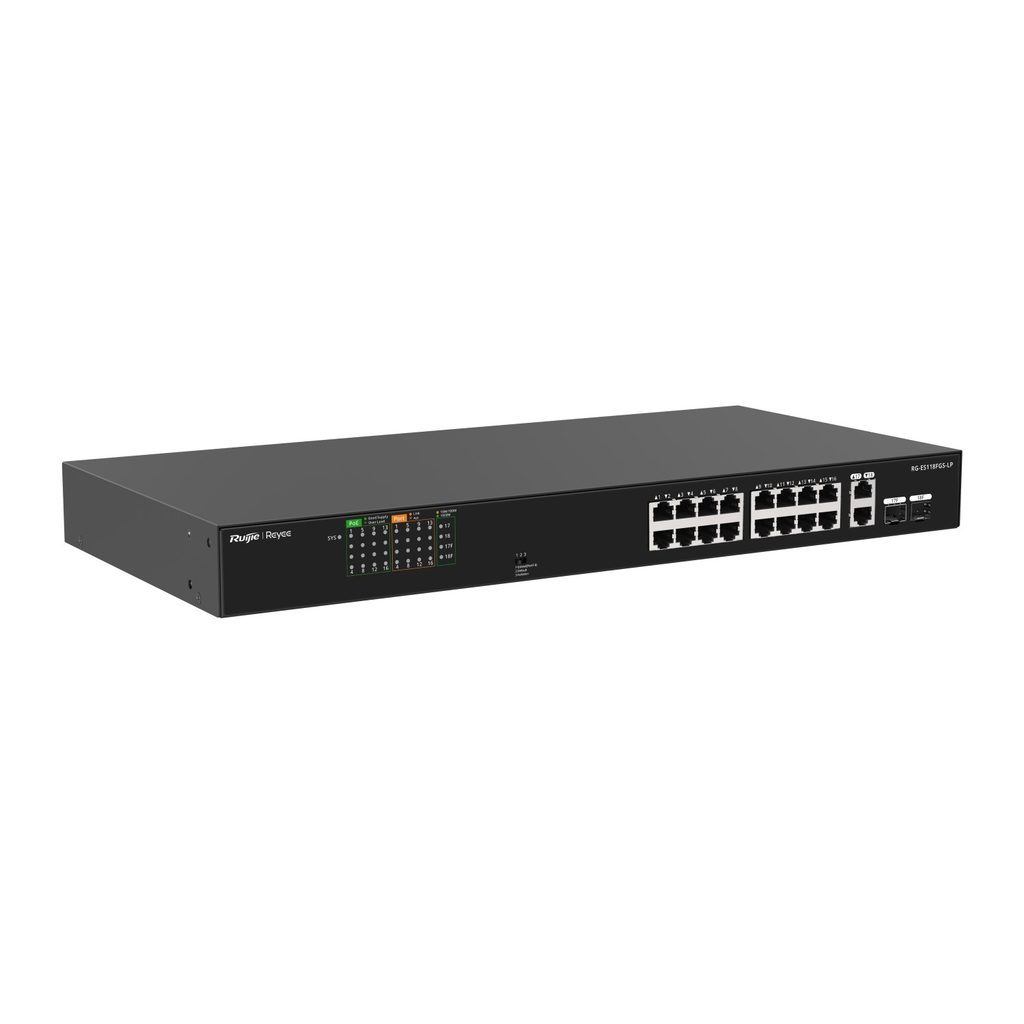
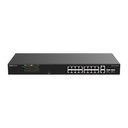
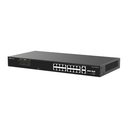
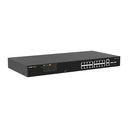
Overview of Reyee RG-ES118FGS-LP
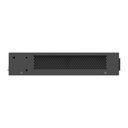
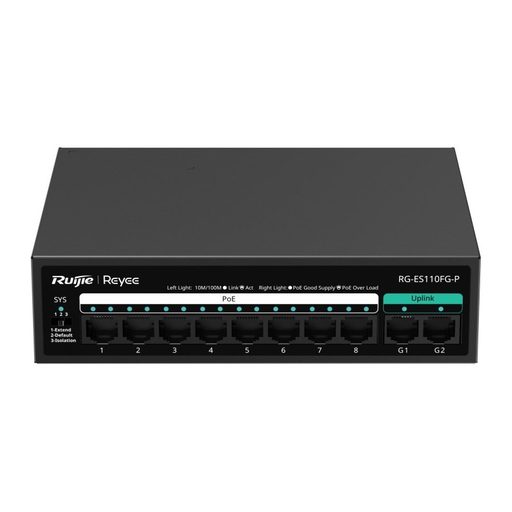
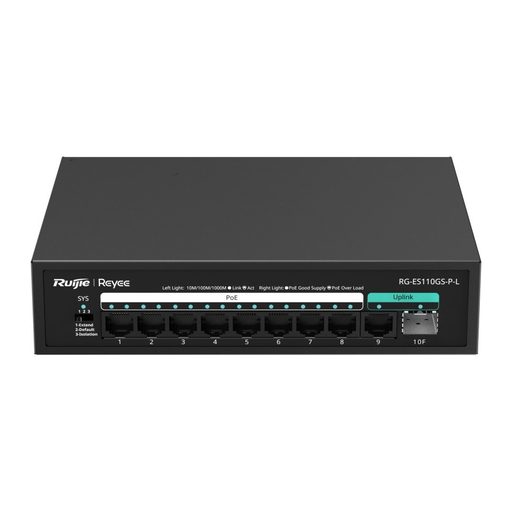
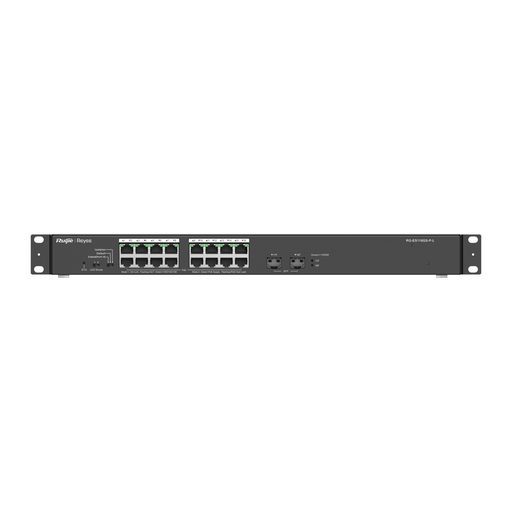
The Reyee RG-ES118FGS-LP is a 16-port 10/100 Mbps unmanaged PoE switch with two 10/100/1000 Mbps uplinks, both available as RJ45/SFP combo ports. All 16 access ports deliver IEEE 802.3af/at PoE/PoE+ power from a 120 W budget, making it a plug-and-play choice for IP camera systems in retail shops, cafes, home offices and small surveillance projects. A DIP switch selects Default, Extend (long-distance up to 200 m at 10 Mbps on ports 1-8) or Isolation mode, while PoE watchdog automatically recovers unresponsive devices. The metal 19-inch rack-mount chassis is fanless, and the switch is visible on Ruijie Cloud when a managed Reyee switch is on the same network.
Technical Specifications – Reyee RG-ES118FGS-LP
Product Information
| Product Category | Layer 2 |
|---|
| Warranty | 3 years |
|---|
Port Specifications
| Total number of RJ45 ports | 18 |
|---|
| Total number of optical ports | 2 |
|---|
| Number of 1GE combo ports | 2 |
|---|
| Number of 1GE SFP ports | 2 |
|---|
| Number of 10/100BASE-T ports | 16 |
|---|
| Number of 10/100/1000BASE-T ports | 2 |
|---|
| Ultra-long-haul transmission | Yes |
|---|
| DIP switch | Extend mode: The rate of Ports 1 to 8 is reduced to 10 Mbps, but the maximum transmission distance can be up to 200 meters (Cate5e cables required). Flow control on. Default mode: All ports can communicate with each other. Flow control on. Isolation mode: Ports 1 to 16 cannot communicate with each other, but they can communicate with ports 17 and 18. Flow control on. |
|---|
Power Supply and Consumption
| PoE Out standard | PoE/PoE+ (IEEE 802.3af/at) |
|---|
| Number of PoE/PoE+ Out ports | 16 |
|---|
| PoE budget | 120 W |
|---|
| PoE power pins | 1–2 (+), 3–6 (-) |
|---|
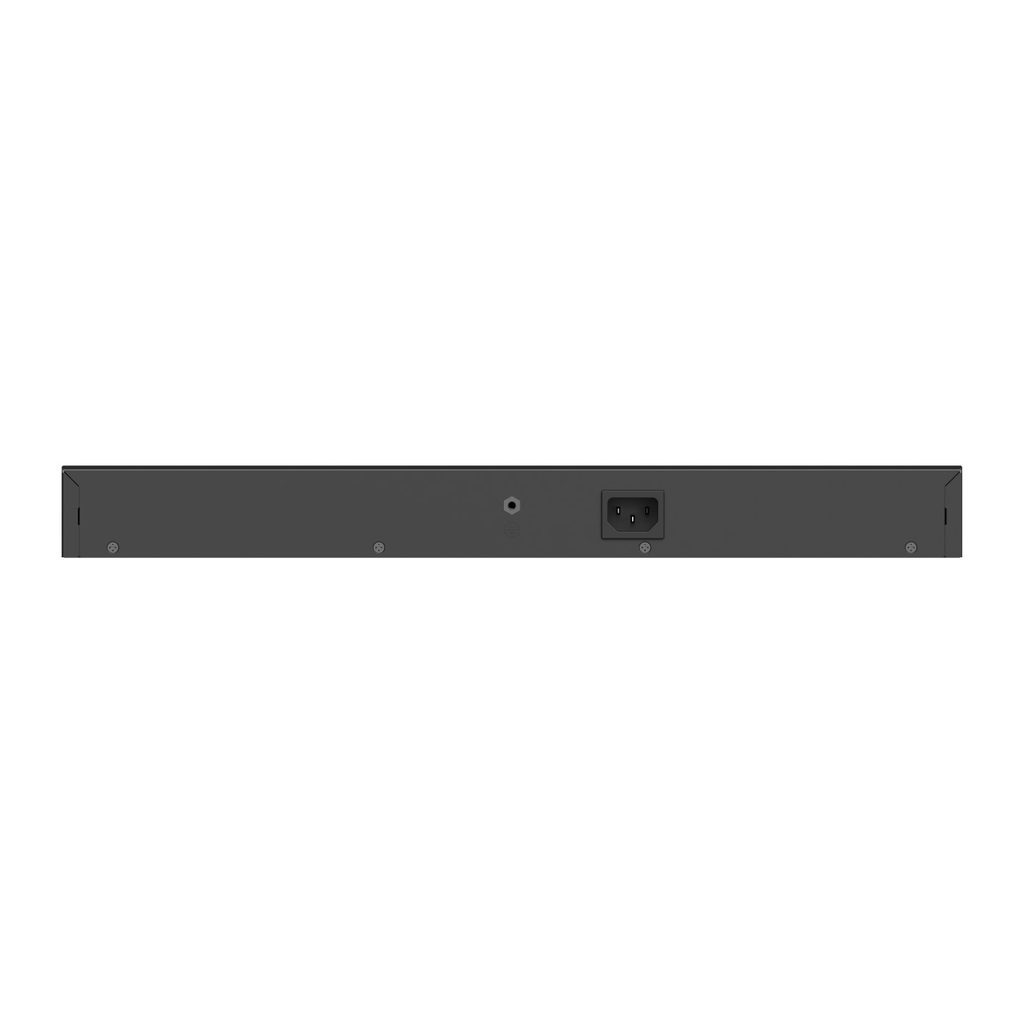
| Power input | 220 V AC power supply: Rated input voltage: 100 V AC to 240 V AC, 50 Hz to 60 Hz; Maximum input voltage: 90 V AC to 264 V AC, 47 Hz to 63 Hz; Rated input current: 3 A |
|---|
| Maximum power consumption | 10 W (with no PoE load); 130 W (with PoE full load) |
|---|
| Power supply | Fixed power supply |
|---|
System Specifications
| Flash memory | 4 MB |
|---|
| Forwarding rate | 5.3 Mpps |
|---|
| Switching capacity | 7.2 Gbps |
|---|
Dimensions and Weight
| Casing | Metal |
|---|
| Product dimensions (W x D x H) | 440 mm x 214.9 mm x 44 mm (17.32 in. x 8.46 in. x 1.73 in.) |
|---|
| Weight | 2.46 kg (5.42 lbs) (without packaging materials); 3 kg (6.61 lbs) (with packaging materials) |
|---|
| Shipping weight | 3 kg (6.61 lbs) |
|---|
Environment and Reliability
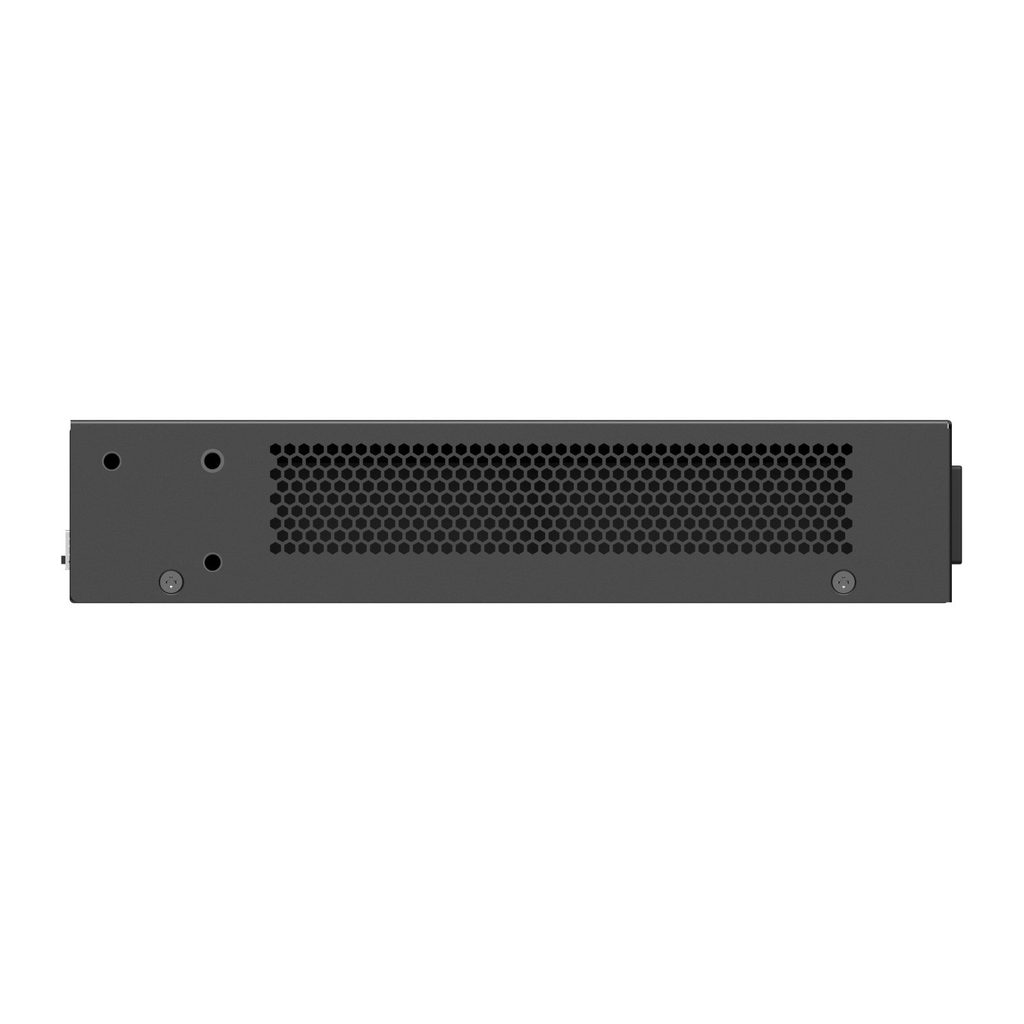
| Fan | Fanless design |
|---|
| Cooling | Natural cooling |
|---|
| Acoustic noise | < 40 dB: 25℃ (77°F) |
|---|
| Mounting options | Rack |
|---|
| Hot swapping of cables | Hot swapping supported by the service port and power connector |
|---|
| MTBF | 200,000 hours |
|---|
| Operating temperature | 0°C to 45°C (32°F to 113°F) |
|---|
| Storage temperature | –40°C to +70°C (–40°F to +158°F) |
|---|
| Operating humidity | 10% RH to 90% RH (non-condensing) |
|---|
| Storage humidity | 5% RH to 95% RH (non-condensing) |
|---|
| Altitude | –500 m to +5,000 m (–1,640.42 ft. to +16,404.20 ft.) |
|---|
| ESD protection | Air discharge: 8 kV; Contact discharge: 6 kV |
|---|
| Surge protection | Service port: ± 4 kV for common mode; Power connector: ± 6 kV for common mode and ± 6 kV for differential mode |
|---|
Certification and Regulatory Compliance
| EMC | EN 55032, EN IEC 61000-3-2, EN 61000-3-3, EN 55035, EN 300 386 |
|---|
| Safety compliance | EN 62368-1, IEC 62368-1 |
|---|
| Certification | CE, CB |
|---|
Basic Configurations
Ethernet Switching
| Maximum number of MAC address entries | 8000 |
|---|
| Interface flow control | Yes |
|---|
| LLDP | No |
|---|
| LLDP-MED | No |
|---|
Interface
| Jumbo frame length (MTU) | 2048 bytes |
|---|
IP Service
| IPv4 ping | No |
|---|
| IPv4 traceroute | No |
|---|
| ICMPv6 | No |
|---|
| IPv6 ping | No |
|---|
| IPv6 traceroute | No |
|---|
Multicast
| IGMPv1 snooping | No |
|---|
| IGMPv2 snooping | No |
|---|
| Basic IGMPv3 snooping | No |
|---|
| Full IGMPv3 snooping | No |
|---|
| IGMP filtering | No |
|---|
Security
System Performance Capacity
| Recommended camera limit | 200W H265: 40; 400W H265: 20 |
|---|
Source: Ruijie Reyee official website and datasheet. Specifications are subject to change by the manufacturer.