






Many sites need to connect a second building to the network: a warehouse behind the office, a guard room at the gate, or a second villa on the same plot. The wrong choice here means a slow network or faults with every thunderstorm. In this guide the Rasid team compares the three options and when we choose each.
1. Why copper is often not enough
Copper network cable is limited to 100 m, and the distance between buildings often exceeds that once real routes are counted. A copper cable between two buildings can also carry differences in earth potential and lightning effects into the switches and damage the ports. So we use copper between buildings only for very short distances, with proper surge protection.
2. Fibre: single-mode or multimode?
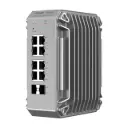
Fibre is immune to electrical interference, does not carry lightning and reaches long distances. Multimode OM3 or OM4 fibre suits shorter distances within a site, while single-mode OS2 fibre reaches several kilometres and is the most common choice today because its modules are easily available. What matters is that the SFP modules at both ends match the fibre type, wavelength and distance.
Browse fibre optic equipment and SFP modules.
3. Cable type and route
- Armoured outdoor cable, or cable resistant to rodents and moisture, for underground routes.
- Running the cable inside buried ducts with inspection pits at bends and on long runs.
- More fibres than you need today, because extra fibres cost little compared with digging again.
- Keeping the route away from main power cables and from areas likely to be dug up.
4. Termination at both ends
We terminate the fibres in an optical distribution frame or a wall-mounted termination box by fusion-splicing factory pigtails, then connect the switch with short fibre patch cords. This is more stable and lower-loss than quick mechanical connections, and protects the delicate fibres from breaking.
5. The wireless bridge
A wireless bridge between two buildings is a quick, suitable solution when digging is difficult or for temporary sites, provided there is a clear line of sight between the two units with no trees or buildings in between. It is affected by interference, dust and wind that moves the poles, and its real throughput is lower than fibre. We mount it on rigid poles, align it precisely and protect it against lightning.
6. Which option do we choose?
- Single-mode fibre: for any permanent link between buildings, especially with cameras and heavy network loads.
- Wireless bridge: when digging is impossible, or for temporary sites with a clear line of sight.
- Copper cable: within the same building, or for very short distances with surge protection.
How fibre loss is measured is explained in our network cable testing guide, and switches for warehouses in our industrial switch guide.
Frequently asked questions
Can media converters be used instead of a switch with an SFP port?
Yes, a converter turns fibre into a copper port and suits small systems, but a switch with an SFP port reduces the number of devices, failure points and power adapters.
How far can single-mode fibre go?
It depends on the SFP modules used: there are modules for 10 km and others for longer distances, and most links between buildings on one site are far shorter than that.
Need installation or maintenance?
Rasid's team works out of Riyadh and travels for supply, installation, programming and maintenance in Riyadh, Dammam, Khobar, Jeddah and across the Eastern Province, with annual maintenance contracts for businesses and homes. Message us on WhatsApp +966559790746 or request a solution for your project.