






Skip to Content
  • Delivery in 4–10 working days across Saudi Arabia
  • A tax invoice with every order
  • Technical support before and after you buy

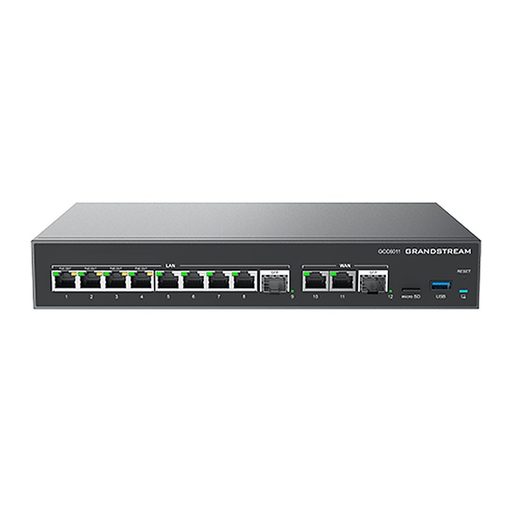
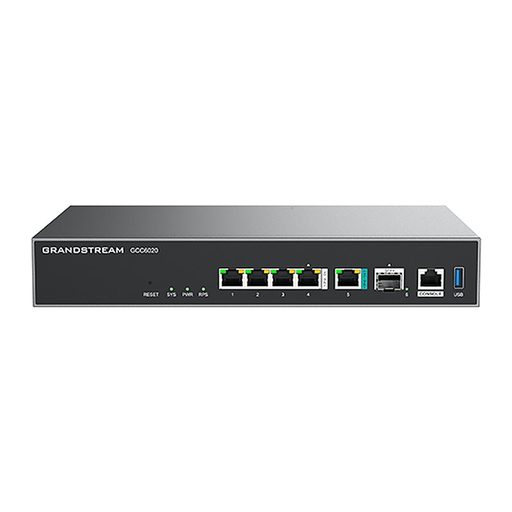
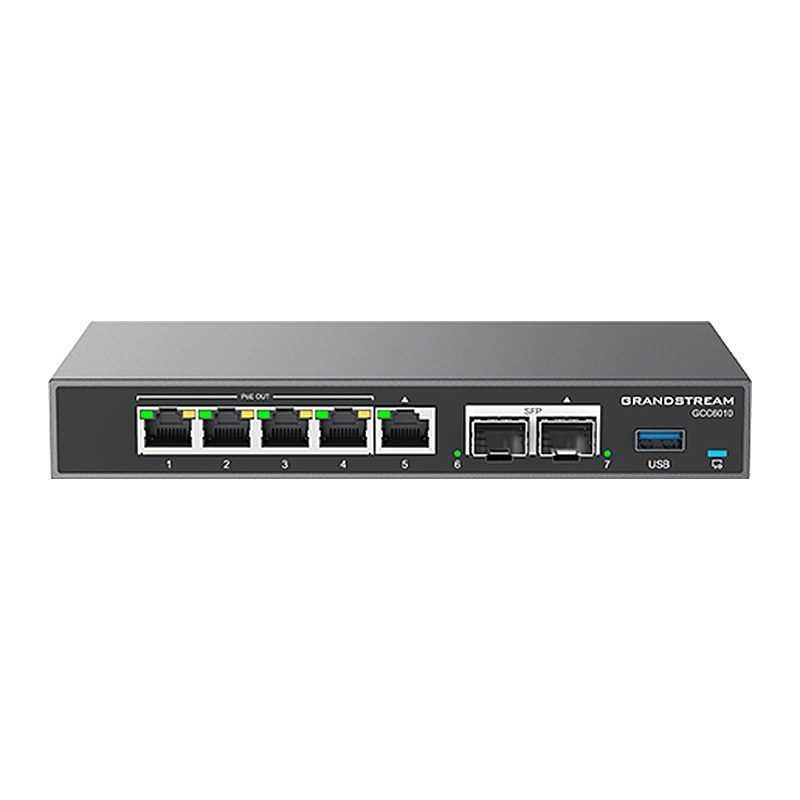
Grandstream GCC6010 All-in-One VPN Router, Firewall, IP PBX & 4-Port PoE Switch

Part number GCC6010
  • Built-in IP PBX provides voice and video communications with advanced collaboration features (24 users and 8 concurrent calls by default, upgrades available)
  • Built-in enterprise-grade firewall provides anti-virus, Layer 3–7 IDS/IPS, DPI, SSL detection, and more
  • Router with built-in VPN supports 2.5 Gbps routing for easy remote access to private networks
  • Built-in network switch with 2 × 2.5G SFP+ ports, 5 × Gigabit Ethernet ports and 4 × PoE out ports
  • Easily configure, deploy, and manage all Grandstream endpoints from one central location
  • Advanced security protection with encrypted traffic, secure boot, unique security certificates, and more
  • Managed through the cloud (GDMS), mobile app, local web UI, SSH, and SNMP
  • Multiple WAN ports with load balancing and failover to maximize connection reliability
Price
⃁ 1,046.26 ⃁ 1,046.26 ⃁ 1,362.31 Save 23%
⃁ 1,046.26 ⃁ 1,362.31
(Tax excluded)
  • Delivery within 4–10 business days across Saudi Arabia
  • Warranty according to the manufacturer
  • Tax invoice with every order
  • Technical support before and after purchase

Not sure this model fits your setup? Read the buying guide
Overview of Grandstream GCC6010

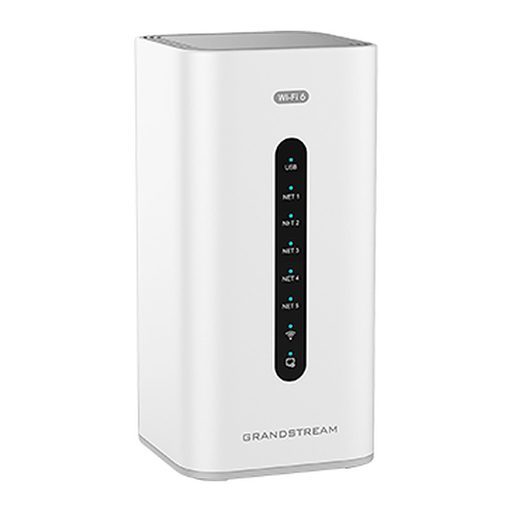
The Grandstream GCC6010 is a UC + networking convergence device that combines four products in one: a VPN router, a next-generation firewall, an IP PBX and a network switch. It provides 2 × 2.5G SFP+ ports and 5 Gigabit Ethernet ports, all WAN/LAN configurable with up to 3 WAN ports, plus 4 PoE out ports (IEEE 802.3af/at, 36 W maximum) to power phones and access points. The built-in PBX supports 24 users and 8 concurrent calls by default, with capacity upgrades available. Managed through GDMS cloud, the mobile app, local web UI, SSH or SNMP, it suits small offices, clinics, retail stores and branch sites.

Technical Specifications – Grandstream GCC6010

Hardware

CPUQuad-core CA53, 2.0 GHz
Network Ports2 × 2.5G SFP+ ports and 5 × Gigabit Ethernet ports; all ports are WAN/LAN configurable (up to 3 WAN ports)
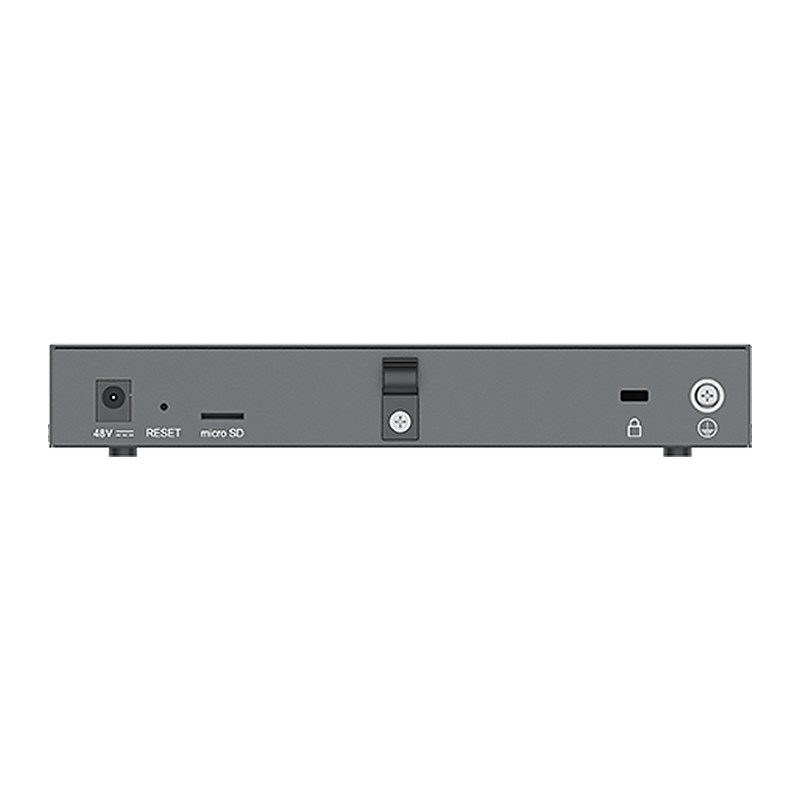
Auxiliary Ports1 × Micro-SD, 1 × USB 3.0, 1 × Reset button
Memory2 GB RAM, 32 GB eMMC Flash
PoE Output4 × PoE ports, IEEE 802.3af/at, Maximum PoE Wattage: 36 W
LEDs7 × single LEDs, 4 × PoE LEDs, and 1 × RGB LED for device tracking and status indication

Performance

Router2.5 Gbps
IPsec VPN Throughput1 Gbps
NAT Sessions160K
IDS/IPS900 Mbps
PBX24 users and 8 concurrent calls by default; upgrades available for purchase

Networking & Security

Connection TypeDHCP, Static IP, PPPoE
Network ProtocolsIPv4, IPv6, IEEE 802.1q, IEEE 802.1p, IEEE 802.1x, IEEE 802.3, IEEE 802.3u, IEEE 802.3x, IEEE 802.3ab
QoSVLAN, TOS; multiple traffic classes, filter by port, IP address, DSCP, and policing; App QoS: application/protocol monitoring and traffic statistics; VoIP Prioritization
FirewallDDNS, Port Forwarding, DMZ, UPnP, DoS & Spoofing defense, traffic rules, NAT; DPI, Anti-Virus, IPS/IDS, SSL Proxy; Content Control: DNS filtering, web URL/class/keyword filtering, application identification and control
IPsec VPNClient-to-Site / Site-to-Site; Encryption: 3DES, AES; Authentication: MD5, SHA-1, SHA2-256; Key Exchange: Main/Aggressive Mode, Pre-shared Key, DH Groups 1/2/5/14; Protocols: ESP; NAT Traversal
PPTP / L2TP VPNPPTP VPN Server / Client; PPTP Encryption: MPPE 40-bit, 128-bit; PPTP/L2TP Authentication: MS-CHAPv1/2; L2TP Client-to-Site
OpenVPN® / WireGuard®OpenVPN® Server / Client; Encryption: AES, DES; Authentication: MD5, SHA-1, SHA2-256, SHA2-384, SHA2-512; Certificate: RSA; WireGuard®

Management

Network ManagementGrandstream Device Management System (GDMS), Local Web GUI, SSH, and SNMP (v1/v2c/v3)
Max AP/ClientsUp to 150 GWN APs; Up to 500 Clients

Power & Environment

PowerUniversal power adapter included: Input 100–240 V AC, 50–60 Hz; Output 48 V DC, 1 A (48 W)
Operating Temperature0 °C to 45 °C (32 °F to 113 °F)
Storage Temperature-30 °C to 60 °C (-22 °F to 140 °F)
Storage Humidity5%–95%, non-condensing

Physical

MountingDesktop, Wall Mount
MaterialMetal
Unit Dimension191 mm × 101 mm × 29 mm (7.52″ × 3.98″ × 1.14″)
Unit Weight1.15 lb
Package Dimension300 mm × 130 mm × 53 mm (11.81″ × 5.12″ × 2.09″)
Package Weight835 g (1.84 lb)
Package ContentGCC6010, Universal Power Supply, Quick Installation Guide
ComplianceFCC, CE, RCM, IC

Source: Grandstream official website and datasheet. Specifications are subject to change by the manufacturer.

PRACTICAL ANSWERS

Business PBX questions

How do I estimate the size of a business phone system?

Separate the number of extensions from the number of simultaneous external calls. Also list sites, users, call routing and growth needs so the proposed system and licenses can be checked against the actual workload.

Should the PBX be on-site or hosted?

Compare administration responsibilities, connectivity, continuity needs and the available support arrangement. Ask for a clear description of what is hosted, what remains at your site, and any recurring licenses or service charges.

Can existing business phones be reused?

Provide the exact phone models and firmware details where available. Check the proposed PBX’s supported device list and required features, then test a representative device before assuming every existing phone can be retained.

Are telephone numbers and call service included with the PBX?

Treat the PBX equipment or software and the telephone service as separate scope items unless the quotation explicitly combines them. Confirm responsibility for numbers, external calling capacity, provider coordination and ongoing charges.

How should business-hours and after-hours calls be handled?

Write the intended call flow before configuration: greetings, departments, fallback destinations and closing-time behavior. Review the wording in the required languages and test each route with a real representative call.

What should be included in a PBX handover?

Agree on the extension list, call-flow diagram, authorized administrator access and configuration backup process. Test the required incoming and outgoing calls, transfers and fallback paths, and document any functions excluded from the scope.