
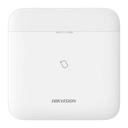
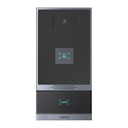
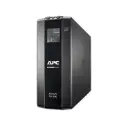



Most faults on electrically locked doors are not in the terminal itself but in the exit button, the power supply or the wiring. In this guide the Rasid team explains these parts and how we wire them safely so people can always get out in an emergency.
The parts of a controlled door
- A card reader or biometric terminal outside.
- A controller that decides to open the door and logs the event.
- An electric lock, magnetic or strike.
- An exit button inside and a green emergency release.
- A door status sensor and a power supply with a backup battery.
1. The exit button
It is mounted inside next to the door at a height everyone can reach. There are mechanical push buttons and touchless infrared buttons that suit places where hygiene matters. We wire it to the controller's exit input so the exit is logged and no door-forced alarm is raised.
2. Fail-safe and fail-secure
A fail-safe lock opens when the power is cut; a fail-secure lock stays locked. Doors on escape routes need fail-safe locking or a guaranteed mechanical way out, while server rooms and stores suit fail-secure locks with a handle that lets people leave from inside.
For a comparison of lock types, read magnetic lock or electric strike.
3. Power supply and battery
We use a dedicated access control power supply at 12 or 24 V to match the lock, rated above the total consumption of the locks with a safety margin. The backup battery sets how long the system keeps working during an outage, depending on its capacity and the load. Biometric terminals are fed from a separate supply so lock switching does not affect them.
4. Protection diode and cable length
When power to a lock coil is switched off, a reverse voltage spike is produced that can damage the controller relay or make devices restart, so we fit a protection diode across the lock terminals if it is not built in. On long runs we choose a suitable wire size so the voltage at the lock does not drop.
5. Fire alarm link and emergency release
A signal from the fire alarm panel cuts power to the locks on escape routes when the alarm sounds, and a green emergency release cuts power to the lock directly, not through the controller, so it still works if the controller fails.
6. Door sensor and testing
The door sensor tells the system when a door is held open or forced. Before handover we test every case, namely opening by card, the exit button, the emergency release, a power cut and the fire signal, and record the results in the handover report.
Common wiring mistakes
- Running the terminal and the lock from one small adapter.
- Wiring the exit button so the door opens without being logged.
- Leaving the lock terminals without a protection diode.
- Wiring the emergency release through the controller instead of cutting power directly.
And browse our access control accessories.
Frequently asked questions
Why does the terminal restart when the door opens?
Usually because it shares a power supply with the lock, or the lock has no protection diode. The fix is a separate supply for the terminal and fitting the diode.
Is an exit button enough for safety?
Not on its own on escape routes, because it depends on the controller. That is why we add an emergency release and a fire alarm link.
Need installation or maintenance?
Rasid's team works out of Riyadh and travels for supply, installation, programming and maintenance in Riyadh, Dammam, Khobar, Jeddah and across the Eastern Province, with annual maintenance contracts for businesses and homes. Message us on WhatsApp +966559790746 or request a solution for your project.