
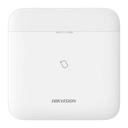
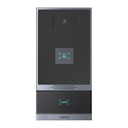

The card is the key your staff carry every day, and its type decides how easy it is to copy and how secure the doors are. In this guide the Rasid team explains the common card and reader types and how we choose the right one for each door.
1. 125 kHz proximity cards
These are the oldest and most widespread: simple and easy to use, but they carry a fixed, unencrypted number that can be copied with basic tools. They suit attendance and general doors, and we do not recommend them on their own for sensitive rooms. They can be upgraded later without changing the doors, by replacing only the readers and cards.
2. 13.56 MHz smart cards
They follow the ISO 14443 standard and hold memory that can be protected. Some older types have well-known weaknesses, while newer encrypted types offer far higher security. When choosing, we ask about the encryption, not just the frequency.
3. Long-range tags for vehicles
At vehicle entrances we use UHF readers that read a windscreen tag from several metres away, so the barrier opens without the driver reaching out. They suit residential compounds and staff car parks, and a tag is cancelled in the system at once when the car is sold or its owner leaves.
4. Reader connections
The most common method is Wiegand, which is simple but unencrypted and one-way. RS-485 with the OSDP standard allows the reader to be supervised and the link to be encrypted, the better choice for important doors and longer distances. Outdoors we choose a reader that resists water and tampering, and we keep the reader cable within the length the connection type allows.
5. Security level per door
- General doors: card only.
- Management offices: encrypted card or biometrics.
- Server rooms and safes: two factors together, such as card plus PIN or card plus face.
- Visitors: temporary cards or a QR code with limited rights.
6. Managing cards
Cards are enrolled with a desktop enroller, a reference number is printed on each, and a register links every card to its holder. When a card is lost or an employee leaves, its access is cancelled at once. If you want to move from old cards to encrypted ones, dual-frequency readers allow a gradual change.
7. Card format and printing
Printable cards can carry the employee's photo, name and company logo, and there are small key fobs and stickers that go on a phone. We choose the format by daily use, making sure the card is durable and does not wear out quickly.
Common mistakes
- Sharing one card between several employees.
- Not cancelling lost cards or the cards of people who have left.
- Giving every employee access to every door.
- Mounting an indoor reader where it is exposed to rain and sun.
See also installing a face and fingerprint terminal and turnstile site requirements, and browse our readers and cards.
Frequently asked questions
Can I use my existing cards with a new system?
Usually yes, if the new reader supports the same frequency and data format. We test a sample of your cards before choosing the readers.
Can a phone be used instead of a card?
Some systems support opening with a phone or a QR code. We decide based on the system in use and your needs.
Need installation or maintenance?
Rasid's team works out of Riyadh and travels for supply, installation, programming and maintenance in Riyadh, Dammam, Khobar, Jeddah and across the Eastern Province, with annual maintenance contracts for businesses and homes. Message us on WhatsApp +966559790746 or request a solution for your project.