


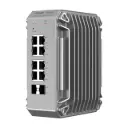


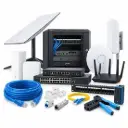



When staff computers, cameras, phones and Wi-Fi guests share one network, a single infected device or a curious guest can reach everything, and the network fills with traffic that most devices do not need. The usual answer is to split the network into virtual networks (VLANs) on a managed switch. In this guide the Rasid team explains the planning and setup step by step.
1. Why split the network?
Splitting achieves three goals: security, because a guest or an infected device cannot see recorders and servers; performance, because broadcast traffic in each network stays inside it; and easier management, because each device type has its own address range and rules. It becomes easy, for example, to block cameras from reaching the internet directly while allowing only the recorder to do so.
2. A typical plan
- A network for staff computers and printers.
- A network for cameras and recorders.
- A network for IP phones with higher priority for voice.
- An isolated guest network that only reaches the internet.
- A management network for switches and access points, reachable only by the administrator.
Each network gets a number and a clear address range recorded in the documentation table, for example camera network number 20 with its own address range.
3. Access ports and trunk ports
An access port belongs to one network and connects an ordinary device such as a computer or camera. A trunk port carries several networks between switches or to the router and access points, tagging each frame with its network number according to 802.1Q. Most mistakes at this stage come from forgetting to add a network to the trunk on one end of the link.
4. Routing between networks and firewall rules
Separate networks only talk to each other through a routing device: a layer 3 switch, the router or the firewall. This is where the rules live: staff reach the printers and the recorder, cameras only talk to the recorder, and guests see no internal device. The golden rule is to allow only what is needed and block the rest.
5. IP phones and the voice network
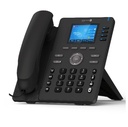
In offices where the computer connects through the phone itself, we enable the switch's voice VLAN feature with LLDP, so the phone joins its network automatically while the computer stays on the staff network, and voice gets higher priority through QoS so calls do not break up during large downloads.
6. Securing the switch itself
- Replace the default password and create separate administrator accounts.
- Shut unused ports or place them in an isolated network.
- Enable loop protection and the spanning tree protocol.
- Update the firmware and save a copy of the configuration after every change.
Browse managed and unmanaged network switches, and read our PoE switch selection guide.
7. Documentation
You receive a table showing every network with its number and address range, every port on every switch with its network and connected device, plus a copy of the configuration. This table saves a lot of searching during any fault or expansion, and helps any technician understand the network quickly.
The full design process is described in our small business network design guide.
Frequently asked questions
Do I need a managed switch in a small office?
If you have cameras, IP phones or a guest network, a managed switch is worth it because it allows segmentation and monitoring. A very small office without these devices may manage with an unmanaged switch.
Do VLANs replace a firewall?
No. Segmentation separates the networks, but the allow and block rules between them and the internet are applied by the routing device or firewall. The two work together.
Need installation or maintenance?
Rasid's team works out of Riyadh and travels for supply, installation, programming and maintenance in Riyadh, Dammam, Khobar, Jeddah and across the Eastern Province, with annual maintenance contracts for businesses and homes. Message us on WhatsApp +966559790746 or request a solution for your project.